
Concrete Driveways
A driveway takes more punishment than any other slab on a property. It carries cars twice a day, the occasional delivery truck and a trailer now and then, and it does all of that on Pee Dee sand that shifts when water gets under it. When a driveway fails here, it is usually not the concrete that gave out first. It is the ground beneath it.
We pour new driveways for new houses, replace old ones that have cracked into a puzzle, widen narrow single-car strips into something two vehicles can use, and rebuild the apron where the drive meets the street. Each one starts with a look at what is under the existing concrete or the bare dirt, because that tells us more about how long the new slab will last than anything we do on top.
New driveway or replacement?
Sometimes the honest answer is that you do not need a whole new driveway. If one or two panels have dropped and the rest are sound, cutting out the bad sections and re-pouring them on a proper base can make sense, and patching a few broken panels is a different job with a different price. If the cracks run through most of the slab, the surface is scaling, or water pools in the middle every time it storms, replacing the whole thing is usually the better money.
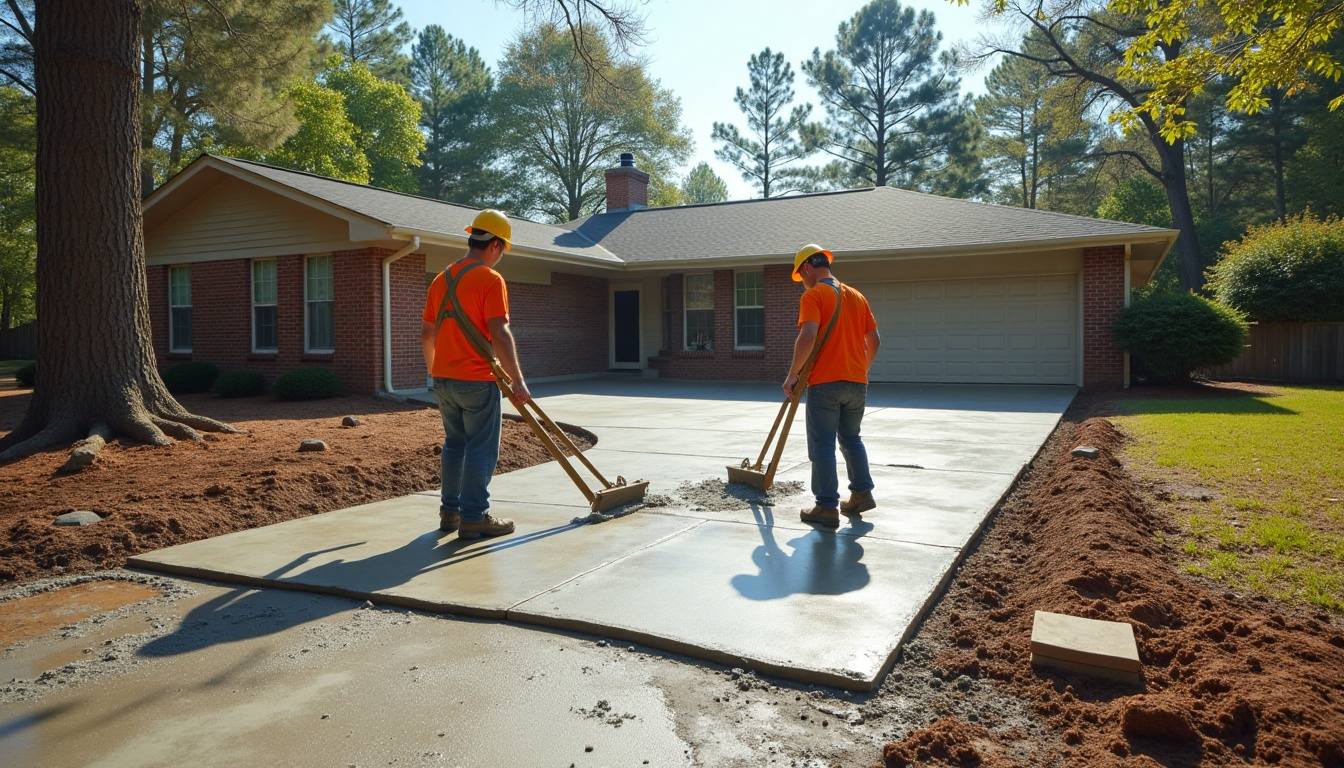
Replacement means breaking out the old concrete, hauling it off, regrading, building a new base and pouring fresh. It is also the moment to fix whatever was wrong with the original layout: widen it, add a parking pad beside the garage, straighten a curve that everyone cuts across, or reset the slope so water runs to the street instead of toward the house.
Base prep on sandy soil
Most of the soil in this part of the state is sandy loam over clay. The top layer drains quickly, which sounds good until a hard summer storm runs off a roof, finds the edge of the driveway and starts carrying sand out from under it. The clay underneath does not drain, so water sits there and softens what is left. Give that a few years and you get the familiar sunken panel by the garage or the corner that snapped off by the mailbox.
So before we set a single form, we strip out grass, roots and soft fill, check the subgrade, and bring in base stone where it is needed. That base gets compacted in lifts with a plate compactor, not just spread out and driven over. Where pines or oaks stand close to the drive, we cut back the roots that would grow under the new slab and talk with you about whether a root barrier along the edge is worth adding.
Thickness, steel and joints
A residential driveway here is poured thicker than a patio, and thicker again at the apron and anywhere a heavier truck will turn. We set steel reinforcement on chairs so it ends up inside the slab where it can do its job, instead of lying on the dirt where it does nothing. On long drives, or ones that carry an RV or a work trailer, we talk through going heavier on both thickness and steel.
Concrete is going to crack; the joints decide where. We lay out control joints at regular spacing and at every corner and change in width, then either tool them while the concrete is wet or saw-cut them as soon as the slab will take it. Clean, straight joints are the difference between a driveway with neat lines and one with random cracks wandering across it.
The apron and the permit
The apron is the stretch between the street and your property line, and it belongs to whoever maintains the road. Inside Florence city limits, driveway aprons and other work in the public right-of-way generally need a permit from the city, and a driveway that ties into a state-maintained road needs an SCDOT encroachment permit. We find out which applies before the quote is final, so the timeline you get already includes it.
Before any digging, the utility lines get marked. Gas, water, power and fiber often run right along the front of a lot, and a request through the state's dig-safe call center gets them flagged so nobody cuts into one with an excavator or a saw. If you live on one of the older streets in town, we have written more about driveways around Timrod Park and downtown and the narrow lots there.
Finish options
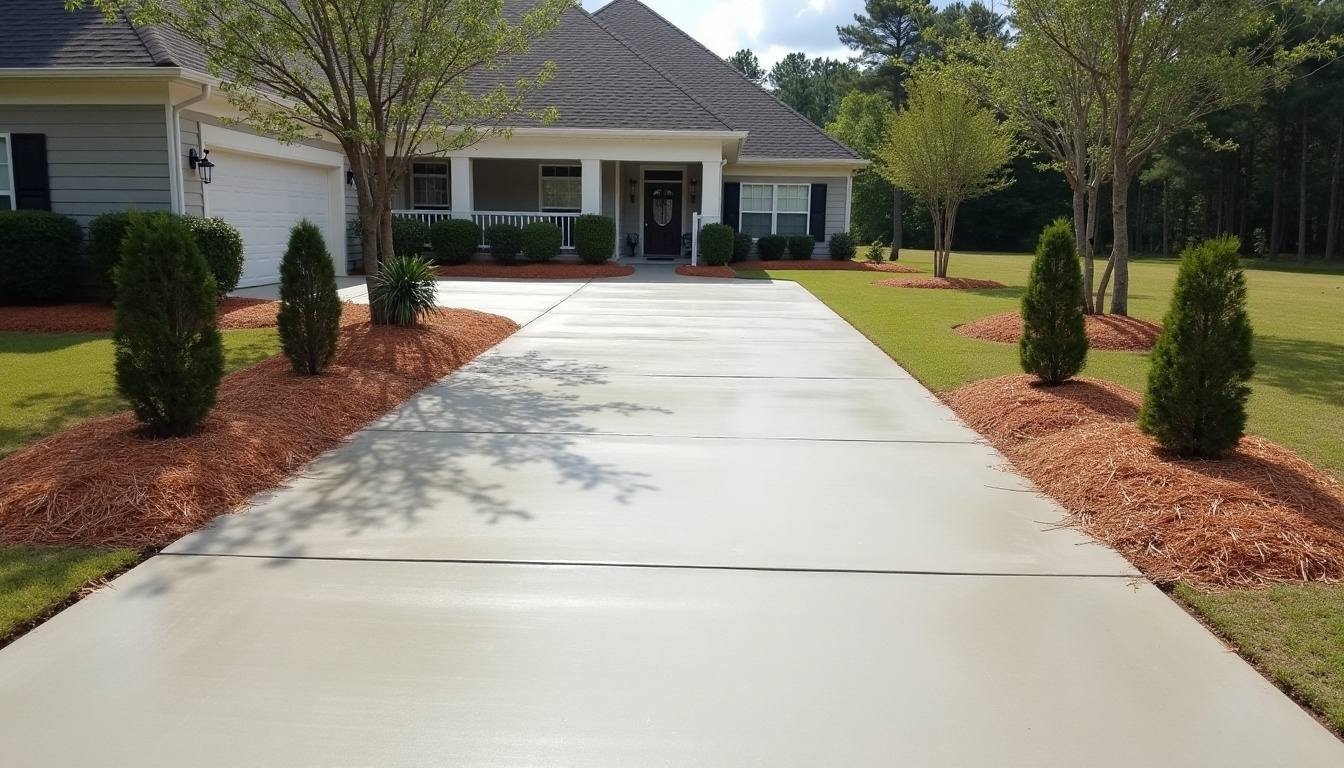
Broom finish is the standard for a reason. A light broom drag across the surface gives tires and shoes grip in the rain, hides the dust and pollen that land on it every spring, and is easy to match if a panel ever has to be replaced. Most of the driveways we pour get a broom finish with a smooth troweled border along the edges and joints.
Exposed aggregate is the other common choice: the surface paste is washed off to show the stone underneath, which gives a pebbled look that wears well and stays grippy. A stamped border, or a stamped section near the front walk, can dress up a plain drive, and if you are thinking about carrying the same look around to a patio off the back door, it is worth planning both together so colors and patterns match. Under pines, a sealer goes a long way toward keeping sap and needle stains from setting into the surface.
What changes the price
Size is the obvious factor, but it is rarely the only one. Tear-out and haul-off of an old slab adds work, and so does a thick old driveway with steel in it. Soft ground that needs more base stone, roots that have to come out, a long reach from where the truck can park to where the concrete has to go, an apron with a permit, and a decorative finish all move the number. Every job is priced after we have measured it on site and looked at the base, with the price in writing before any forms go down. That way the quote covers what your driveway actually needs instead of a guess from a chart.
Related
Concrete Repair and Replacement
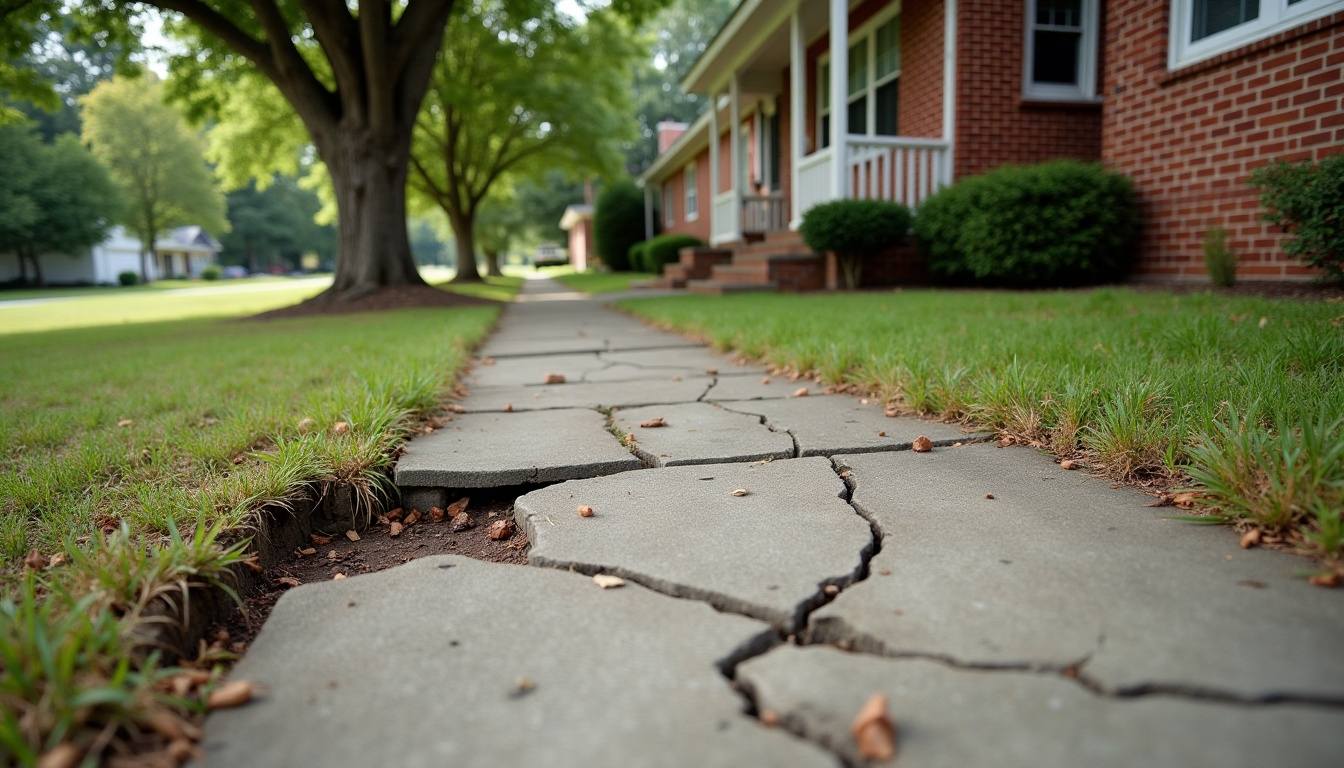
We find out why it broke before we fix it.
Patios and Stamped Concrete
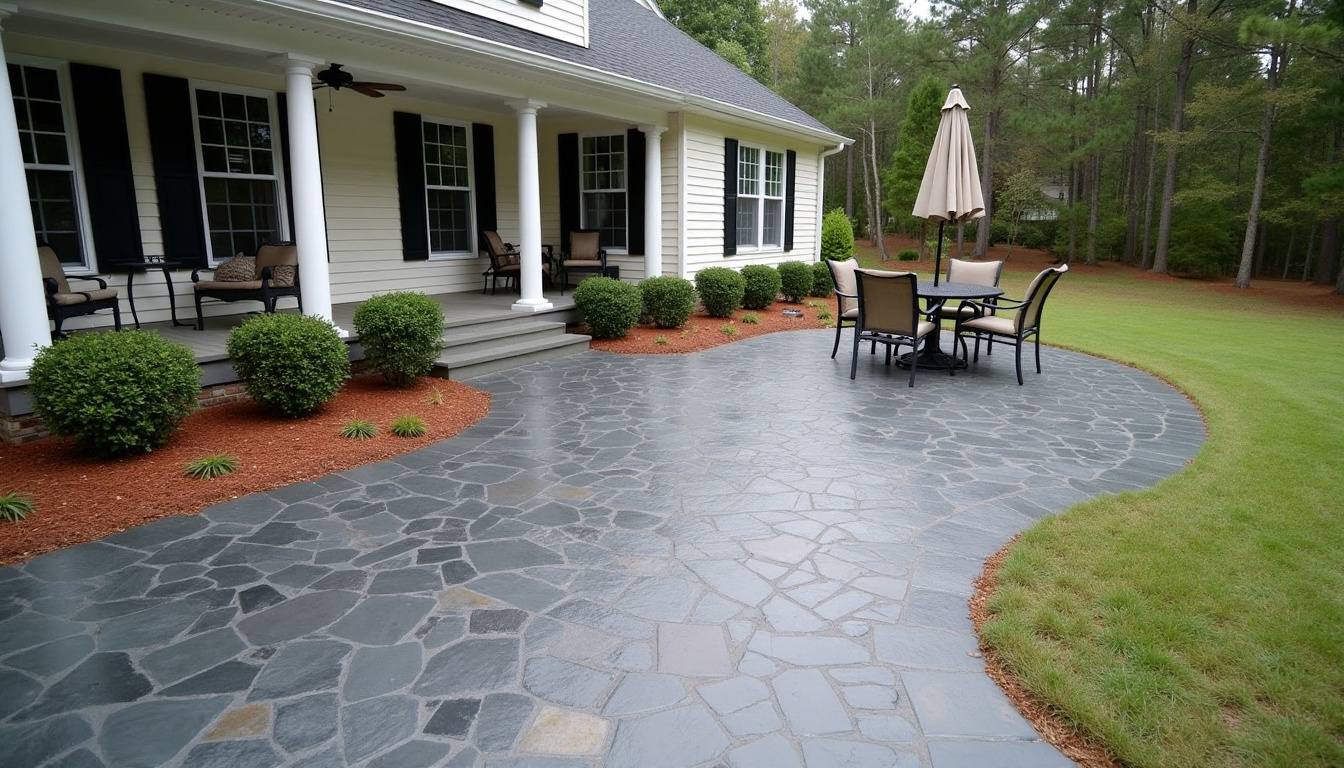
We slope every patio away from the house and seal it against pine sap and summer sun.
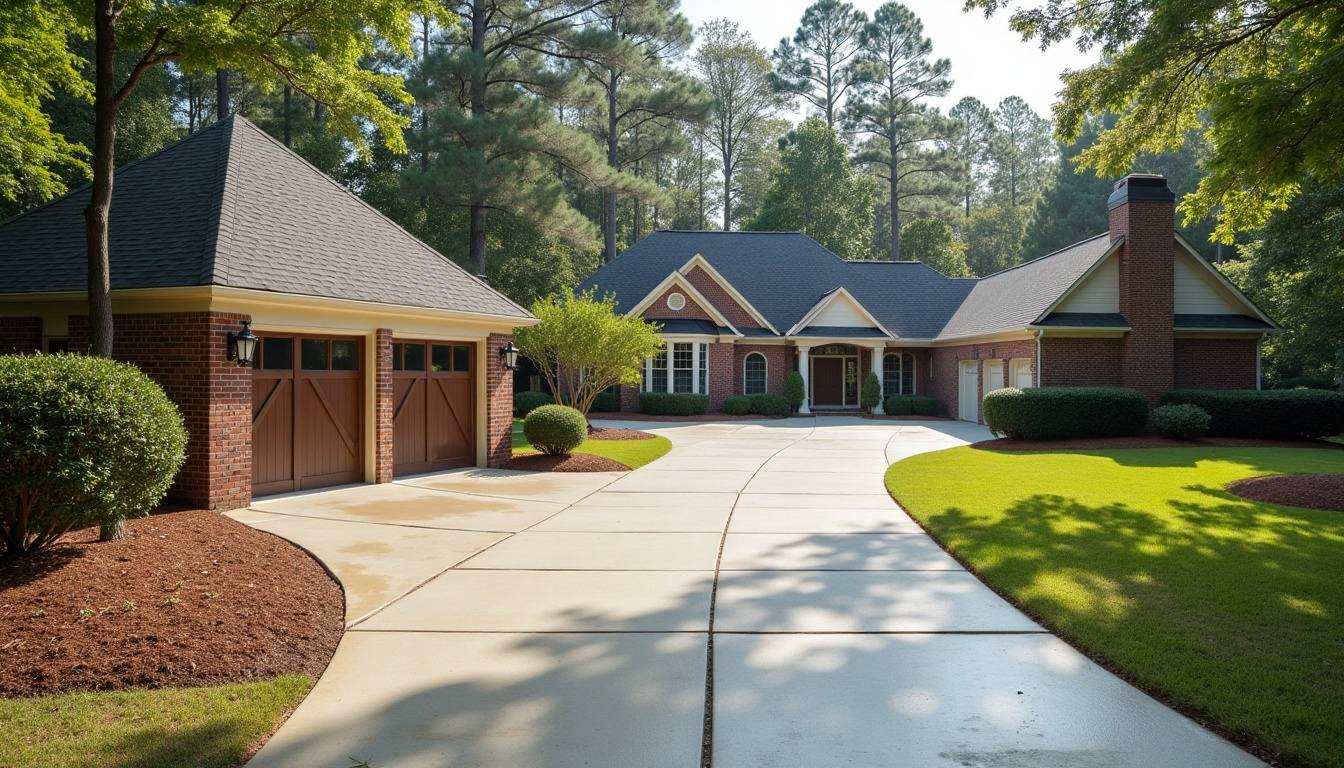
Concrete Work Across Florence
We check the base and drainage first, then quote in writing.
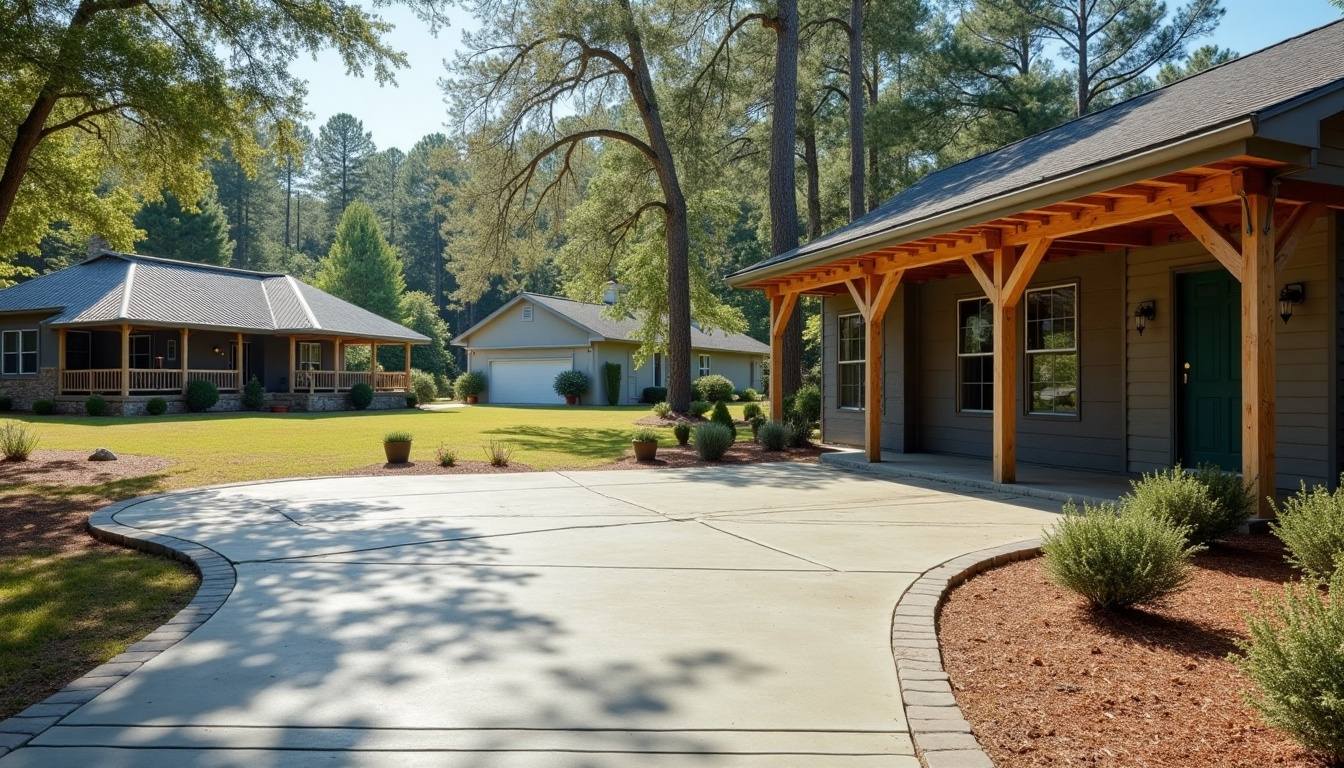
Concrete for Timmonsville Homes and Farms
House driveways, pole-barn floors and equipment slabs, sized for the load and quoted in writing.
Get a driveway quote
Use the quote form and tell us what you have: a new build that needs a drive, an old one that needs to come out, or a narrow strip you want widened. A rough size helps, something like two cars wide and about sixty feet to the street. Add the address if you want us to find it easily. We call back, set a time to measure, and walk it with you.